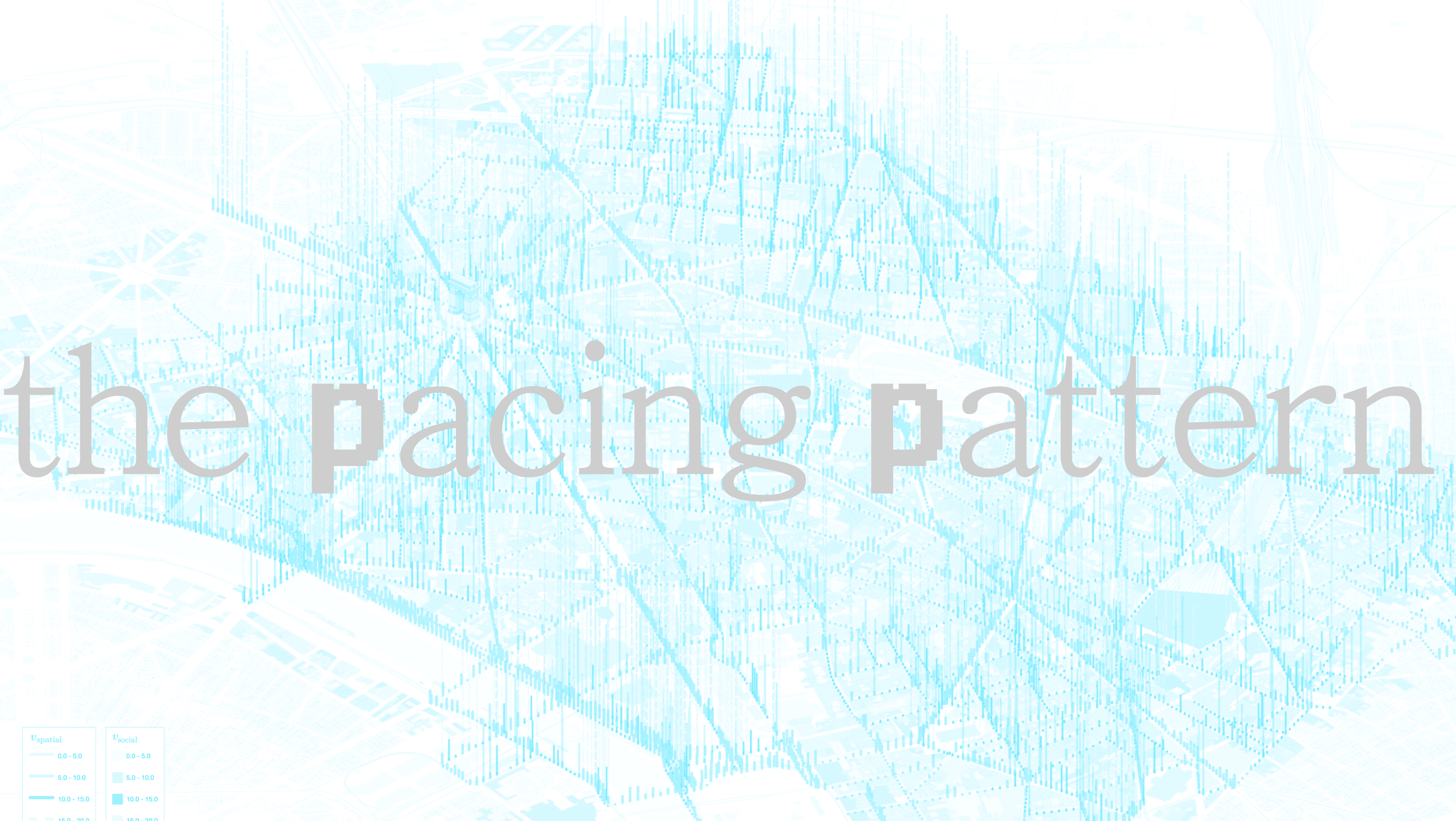
Paris / Design research
Urban pace · Spatial analysis · SentimentThe Pacing Pattern
Connecting spatial speed and lived experience to explore how urban design can support different rhythms of life.
The brief
How can urban form support the rhythms of everyday life?
The Pacing Pattern bridges quantitative and qualitative inquiry through tempo, translating spatial form and descriptions of behavior into comparable, mappable representations of urban pace.
Sentiment adds an experiential reading of where a pace is supported or resisted. Together, these patterns inform tactical design proposals that adjust the conditions for movement, rest, and interaction.
01 / Spatial speed
Reading pace through urban form.
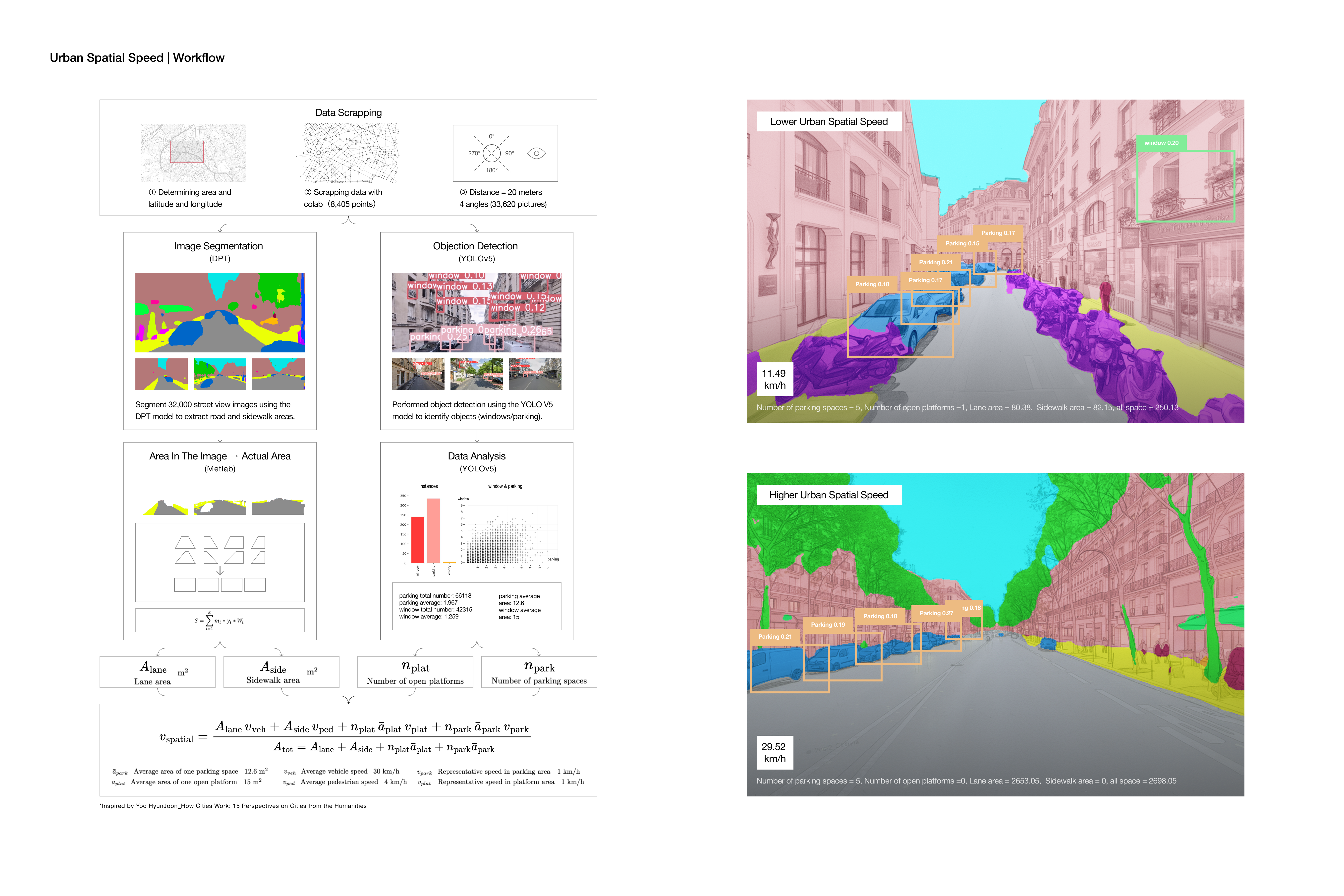
Street-view imagery provides the basis for a computational description of spatial speed. DPT segmentation and YOLOv5 object detection identify road and sidewalk areas, parking spaces, and open platforms, which are combined with representative movement speeds.
02 / Spatial patterns
From street features to a comparable measure.
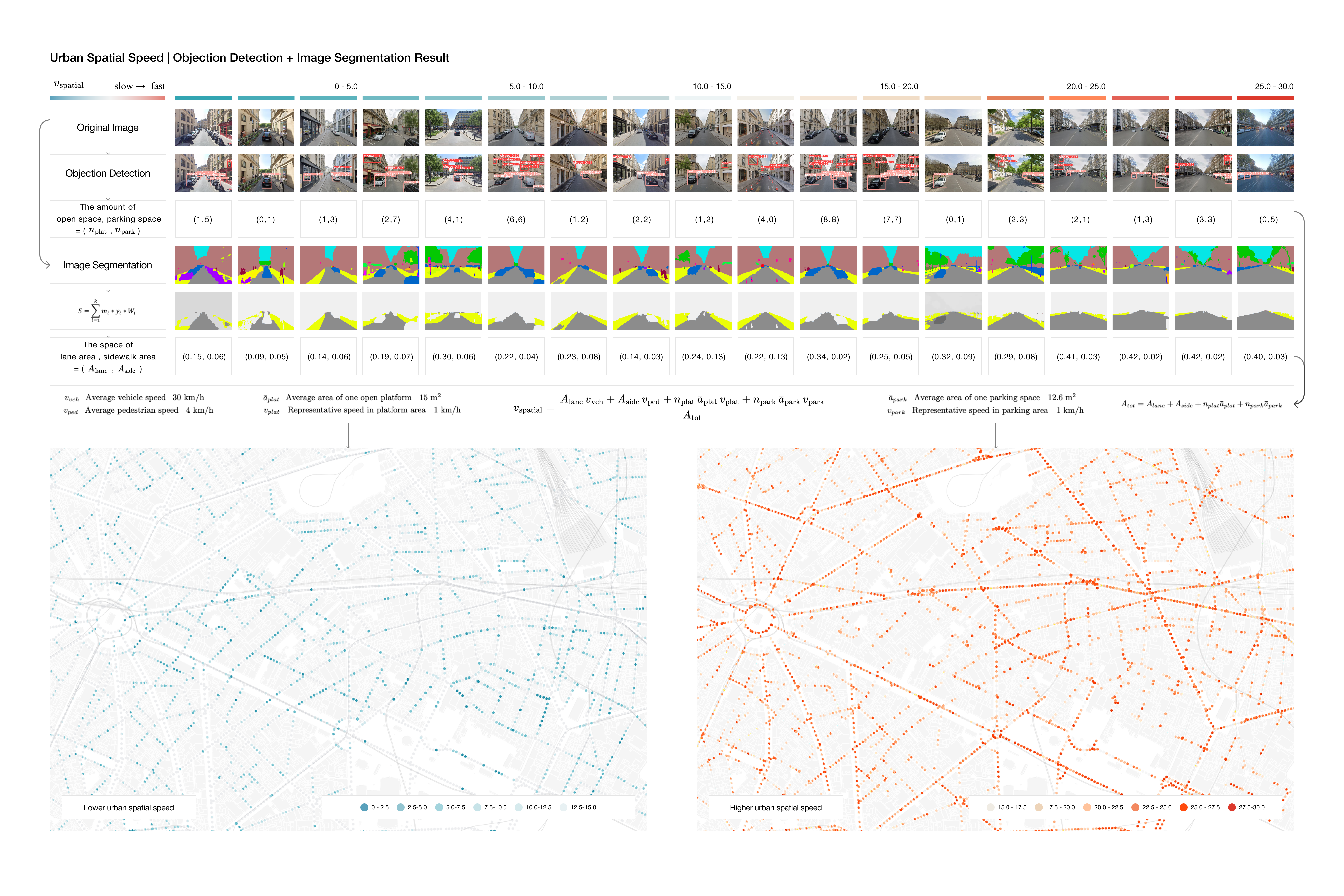
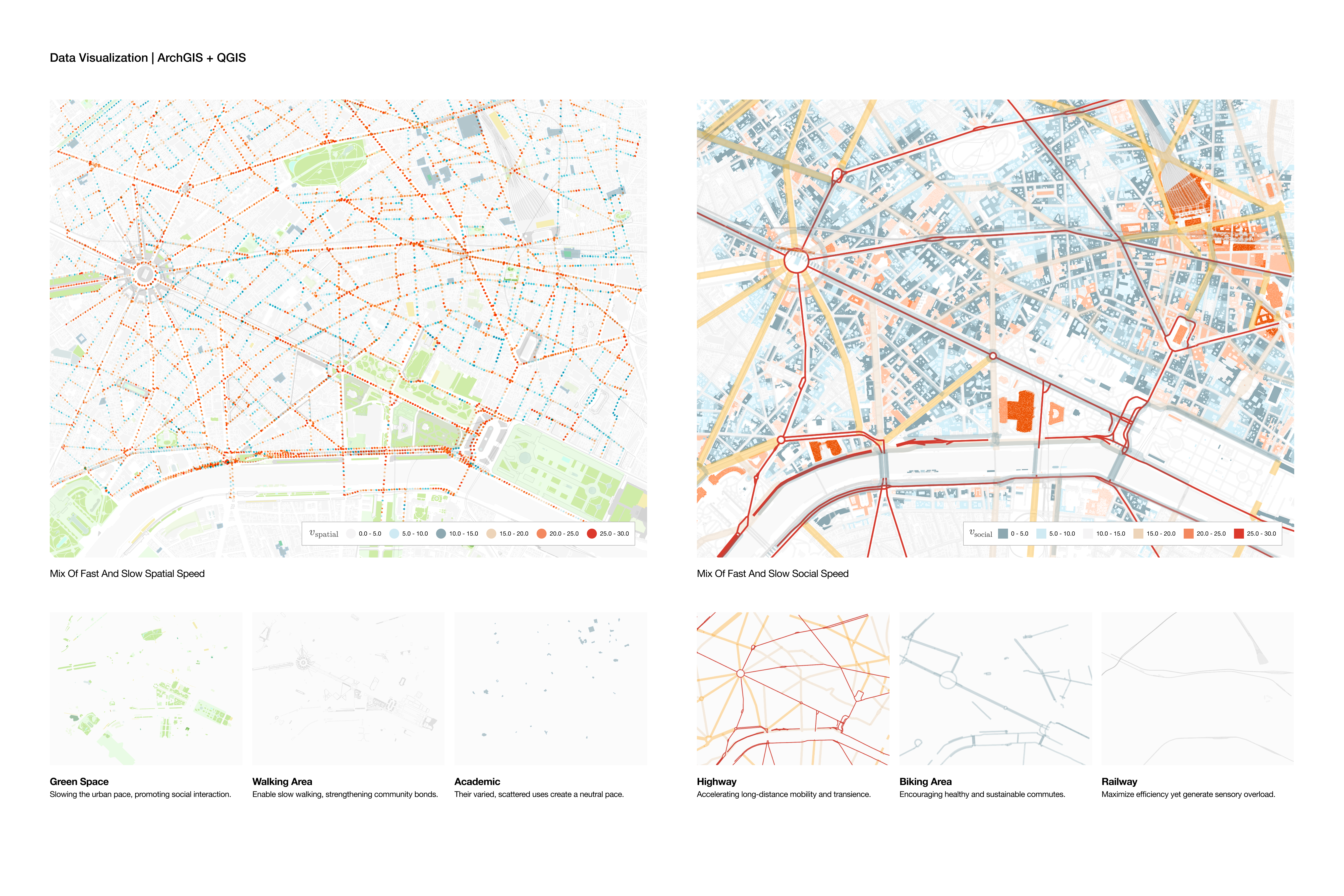
The extracted features are translated into a spatial-speed estimate and mapped across the study area. Comparing lower and higher values makes the distribution of movement-oriented and pause-oriented conditions visible.
04 / Lived experience
Turning descriptions into spatial signals.
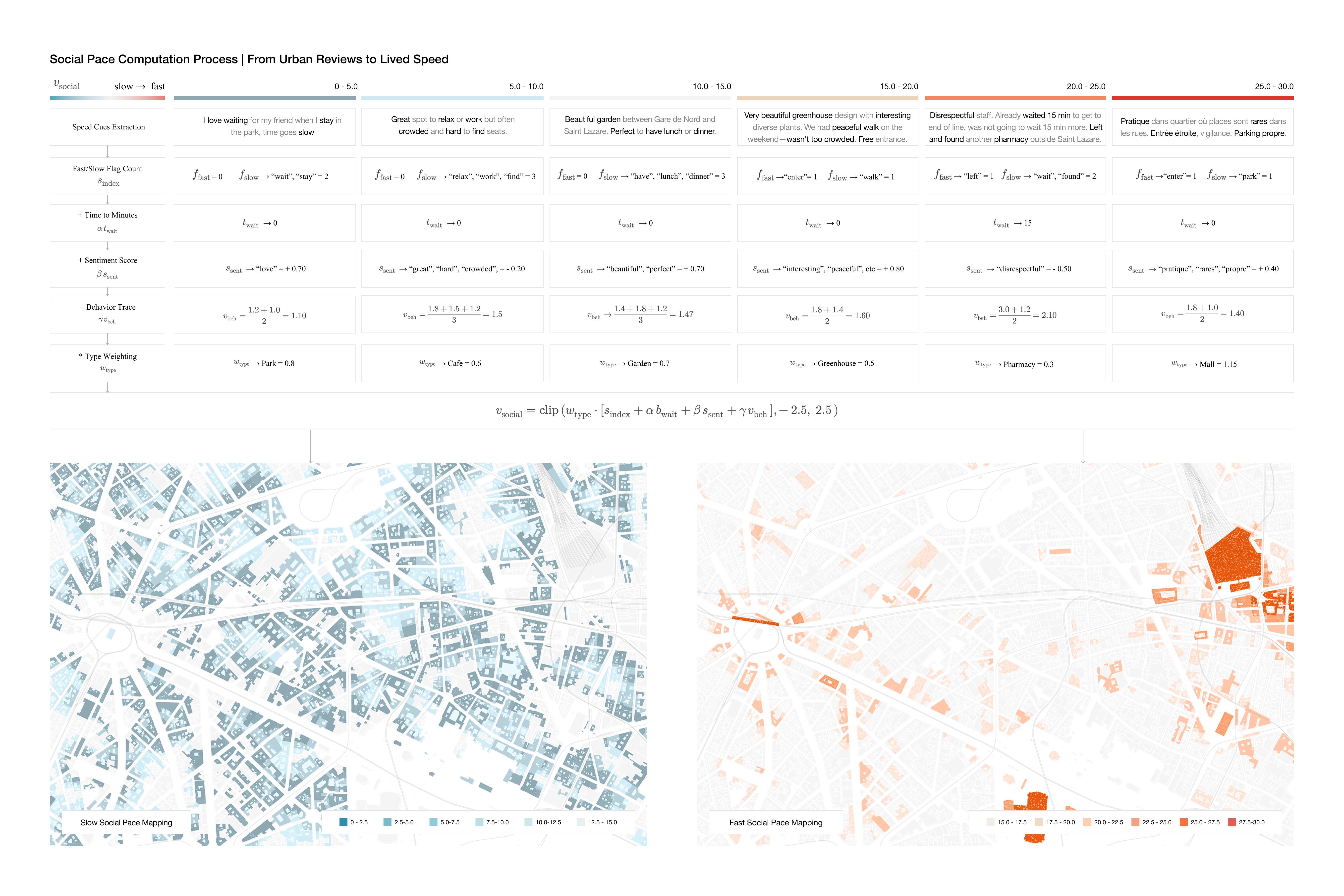
The computation traces how individual descriptions contribute to a comparable representation of social pace. Sentiment acts as an experiential reinforcement signal, helping distinguish whether a given rhythm is supported or resisted in the accounts of a place.
05 / Comparative mapping
Two readings of the same city.
Spatial speed and social pace are placed side by side to examine their relationship with urban infrastructure. Green spaces, walking areas, transport networks, and activity settings provide context for reading where the two measures align or diverge.
06 / Data visualization
Making overlapping rhythms visible.
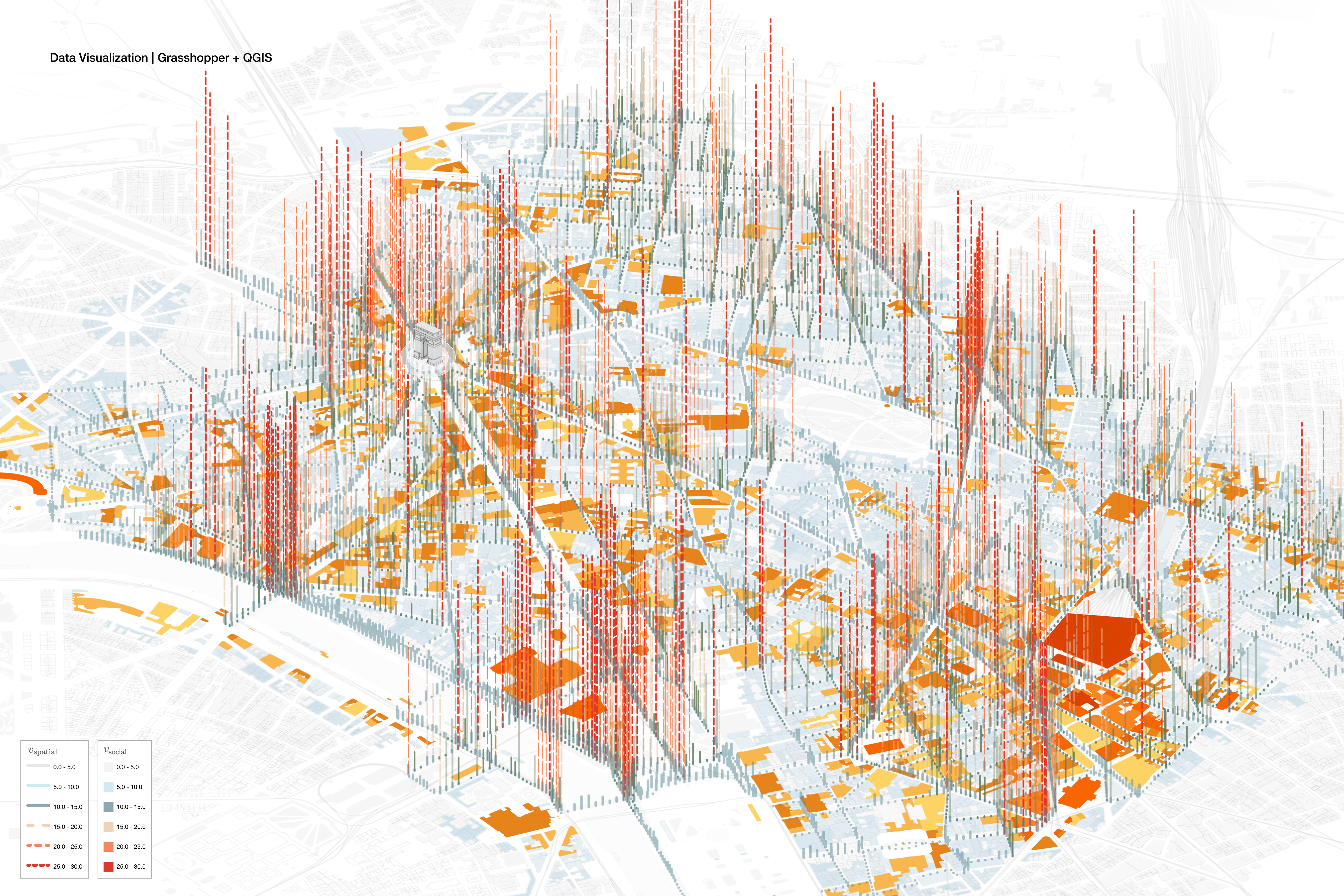
A three-dimensional visualization developed with Grasshopper and QGIS brings the two pace measures into a shared urban frame. The layered representation makes local contrasts visible while retaining their position within the wider study area.
07 / Area analysis
Reading the conditions behind the pattern.
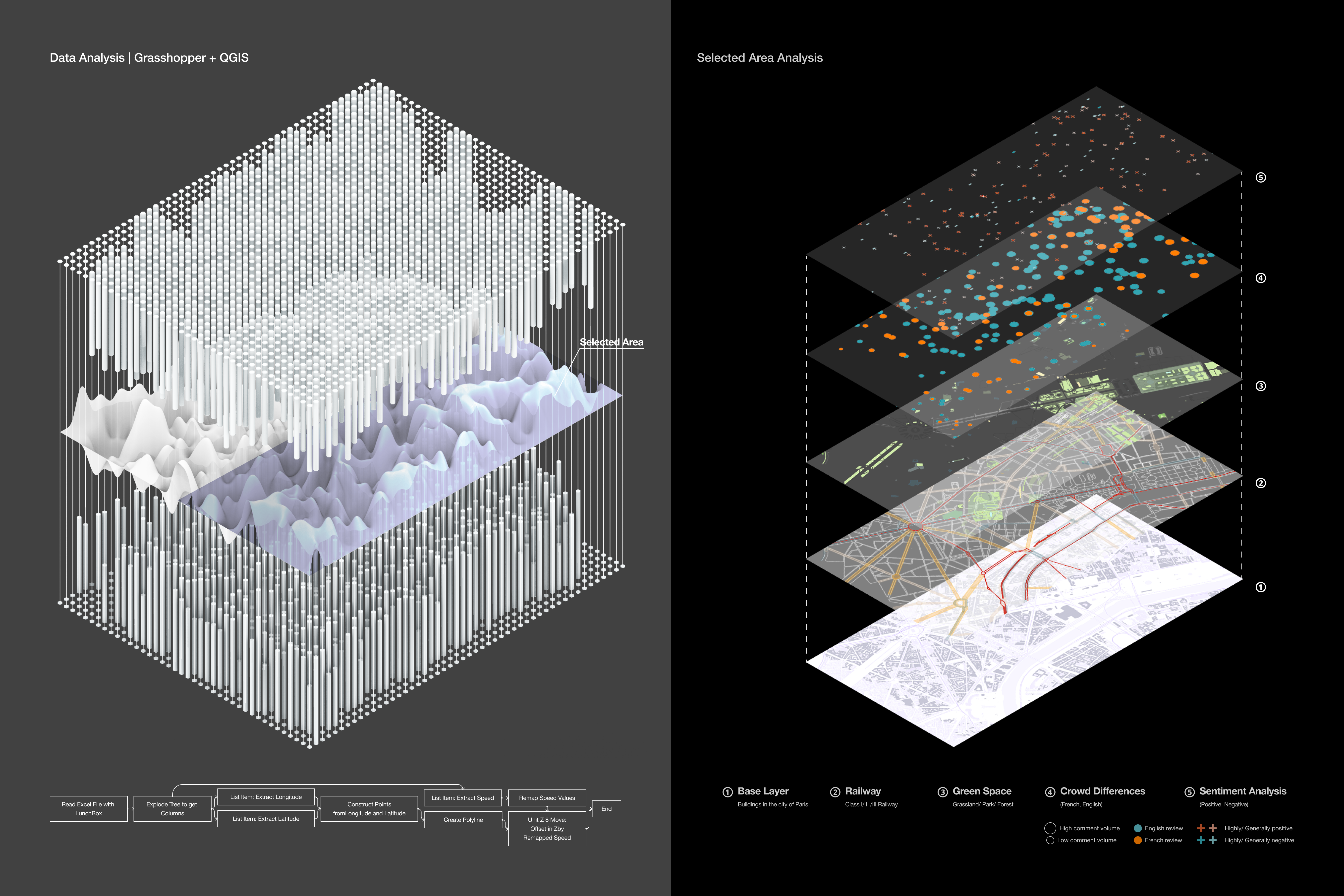
A selected area is examined through layers of buildings, railways, green space, review language, and sentiment. This moves the investigation from an overall pace map toward the local conditions that could inform a design response.
08 / Representative cases
Alignment is only part of the story.
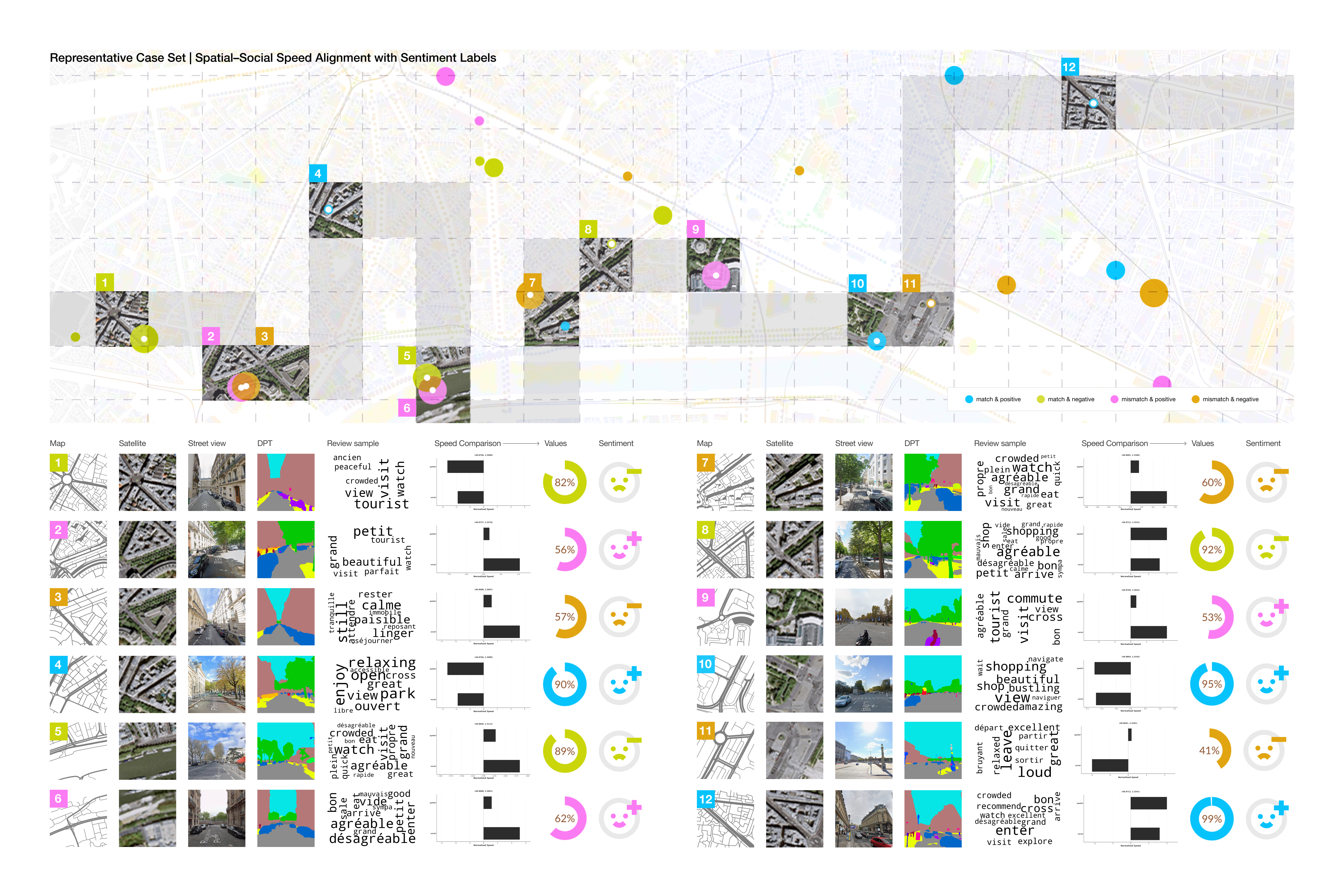
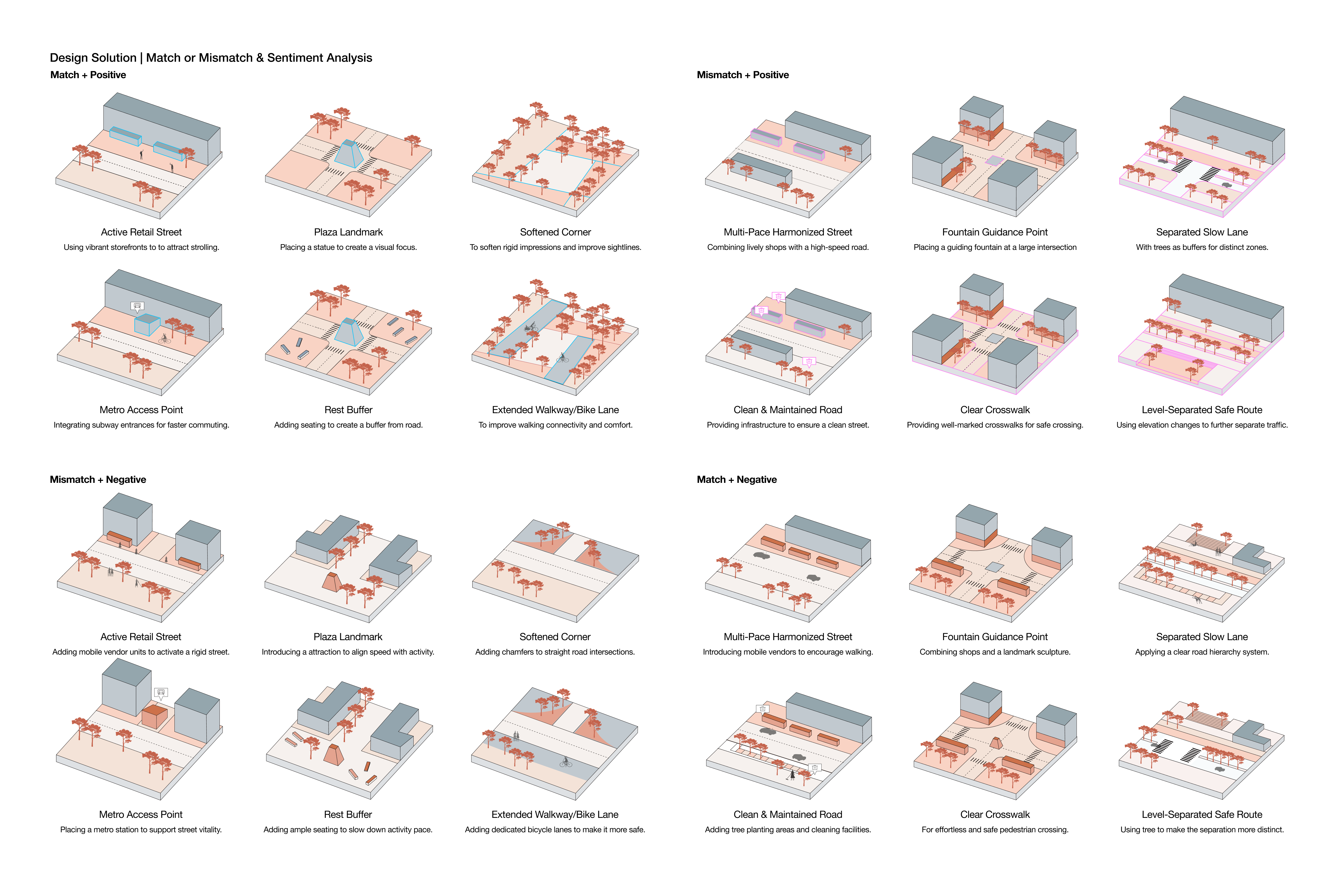
Twelve cases compare spatial and social speed alongside positive or negative sentiment. The resulting four combinations distinguish whether pace measures match from whether the reported experience is positive, creating a more specific basis for intervention.
09 / Design strategies
Respond to the rhythm of each place.
The design catalogue translates those four conditions into possible interventions, including active frontages, landmarks, seating, crossings, planted buffers, and separated routes. The aim is to adjust spatial conditions so different rhythms can coexist, rather than prescribe a single pace of behavior.
10 / Urban proposal
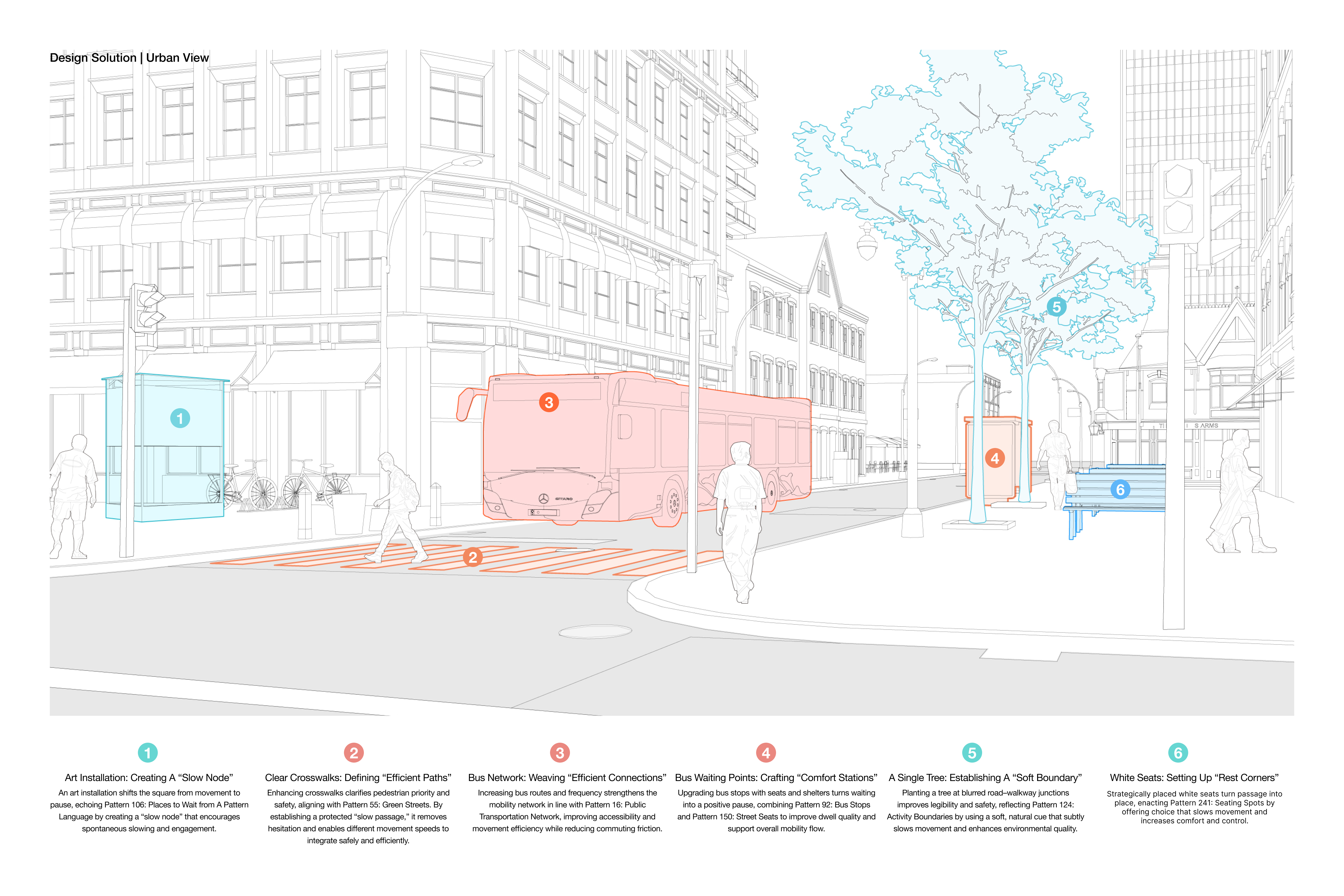
Space to move. Space to stay.
The final street study brings six interventions together: an art installation, clearer crossings, stronger bus connections, improved waiting points, a planted boundary, and seating. Each addresses a different relationship between movement, waiting, comfort, and choice.
11 / Research perspective
Design the conditions for different rhythms.
The project uses the relationship between spatial form, social pace, and sentiment to make design responses more specific to place. Its contribution is a framework for moving from computational analysis to situated urban proposals.
The speed values are constructed analytical measures, and the interventions are design proposals rather than measured post-implementation outcomes.
03 / Social pace
Listening to how places are experienced.
The social-pace model draws on 2,300 English and French reviews. Natural language processing identifies fast and slow cues, while waiting time, sentiment, behavioral traces, and place type contribute contextual information about the experience described.