Singapore / Speculative design research
Urban experience · XR · Mixed methodsThe Blasé City
Exploring how efficiency-driven urban technologies shape perception, everyday experience, and the possibilities for human connection.
The brief
When should technology become present—and when should it remain invisible?
The Blasé City investigates emotional detachment as a possible structural outcome of optimized urban environments. It asks how design and engineering might create space for attention, connection, and everyday experience.
Combining field research, VR simulation, and EEG sensing, the project develops a speculative XR layer for moments of expression, encounter, and pause.
01 / Field research
Shared routes. Separate lives.
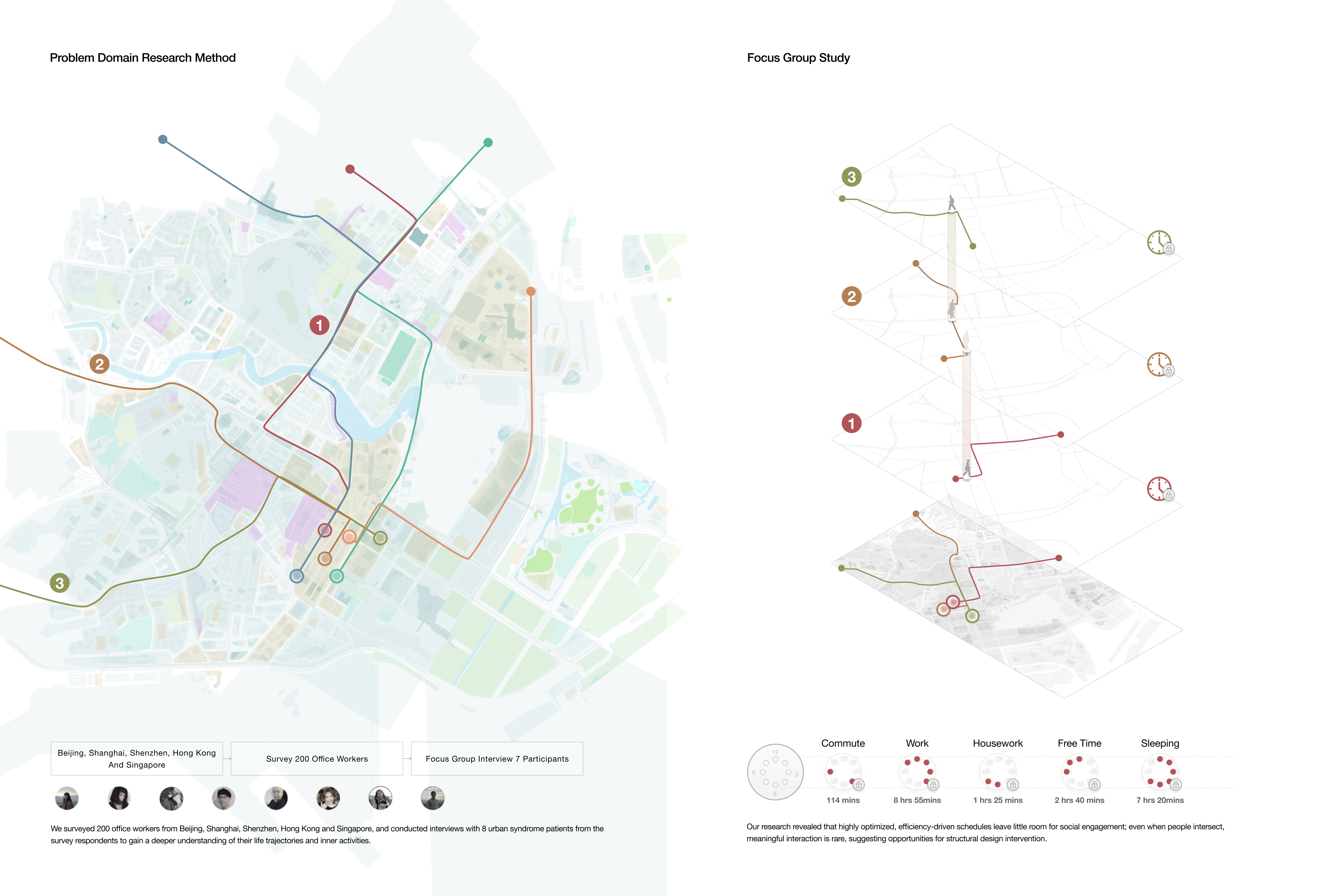
A survey of 200 office workers across Beijing, Shanghai, Shenzhen, Hong Kong, and Singapore, followed by qualitative interviews, examined everyday routines and opportunities for connection. The focus-group mapping suggested that intersecting paths do not necessarily lead to meaningful interaction.
02 / Journey & method
Finding the moments in between.
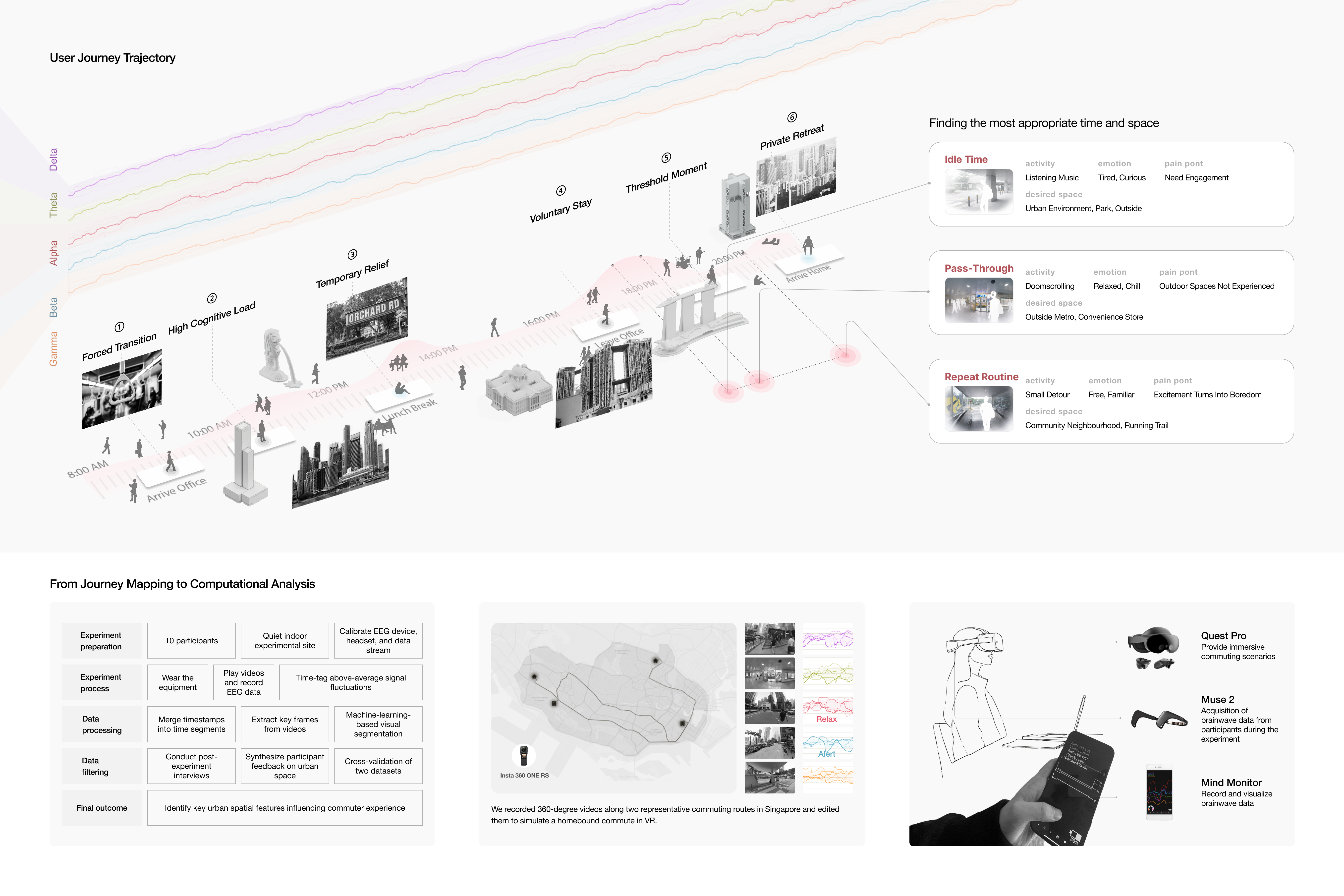
The journey map identifies idle time, pass-through spaces, and repeated routines as potential openings for intervention. A ten-participant experiment used recorded 360-degree commuting scenes, VR simulation, EEG sensing, and follow-up interviews to investigate responses to urban space.
03 / Computational analysis
From recorded responses to spatial opportunities.
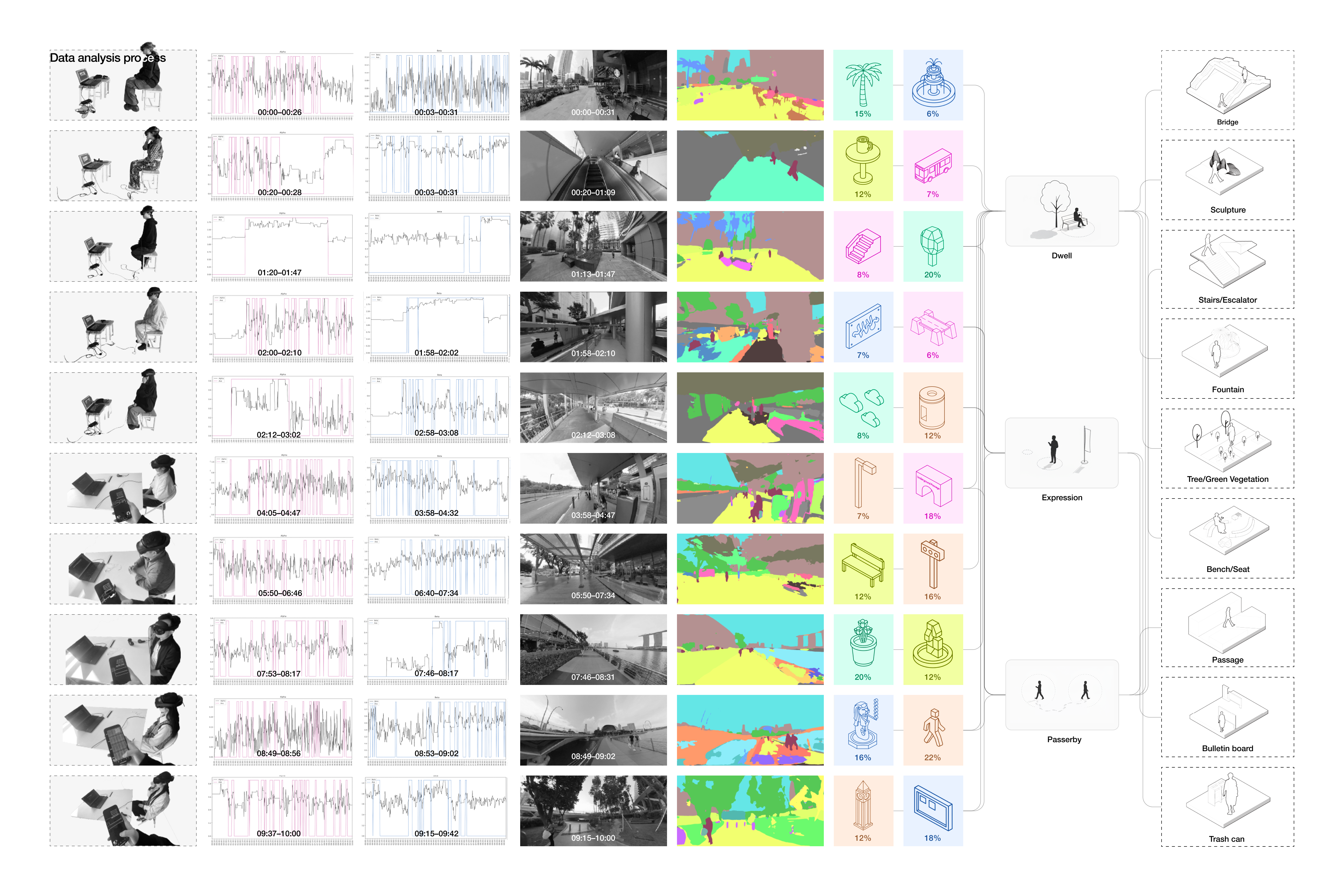
Time-tagged EEG fluctuations were aligned with video frames and visual segmentation, then considered alongside participant feedback. The analysis informed three design directions: dwelling, expression, and encounters between passersby.
04 / System architecture
An experience layer woven into the city.
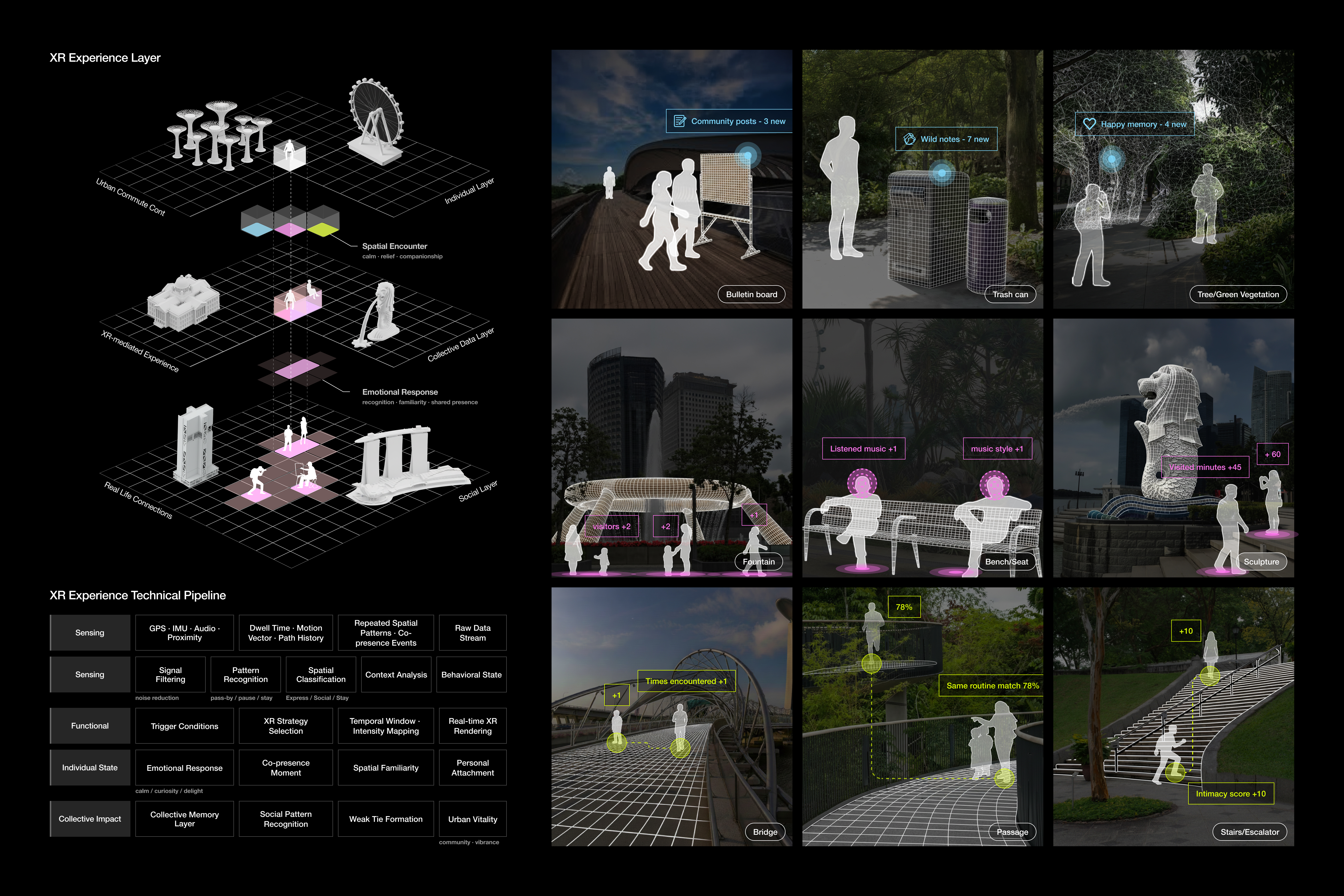
The proposed XR system connects spatial sensing, behavioral patterns, and context with lightweight interventions. Its intent is to make shared presence perceptible at relevant moments, while allowing technology to recede into the background.
05 / Interaction studies
Small gestures. Possibilities for connection.
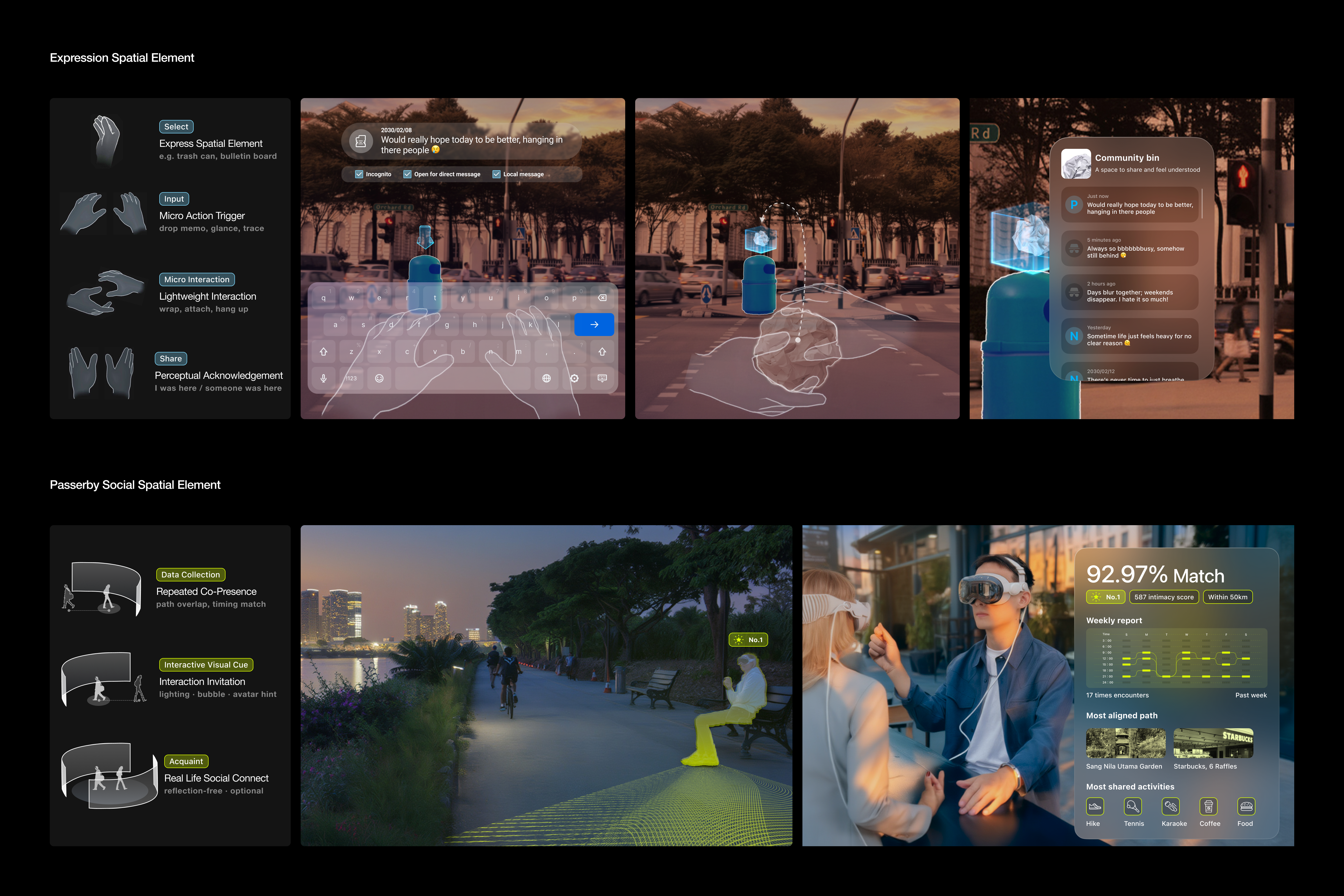
Two interaction sequences explore how an everyday route could become more socially legible: leaving a message attached to a place, and recognizing someone whose routine repeatedly overlaps with one’s own. These are proposed experiences rather than measured social outcomes.
06 / Dwell experience
A reason to pause.
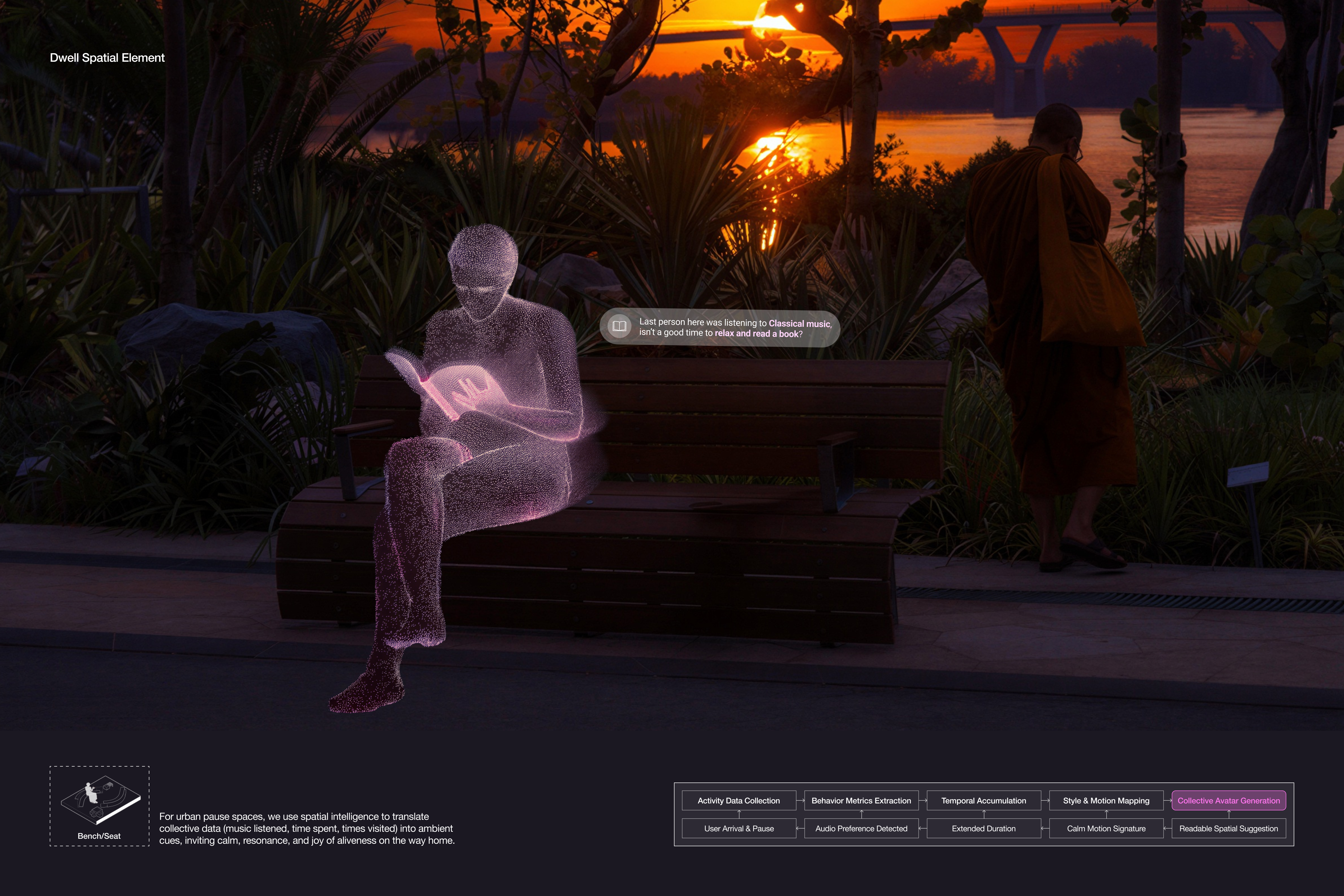
At a shared bench, traces of earlier visits become a quiet invitation to stay. The concept translates collective activity—such as music, time spent, and repeat visits—into an ambient presence that suggests a different pace of urban life.
07 / Research perspective
Designing for presence.
The project frames urban technology around the timing and quality of its presence: offering an invitation when a moment allows it, and preserving room for everyday life when it does not.
This is a speculative research proposal. The studies informed the design direction; the illustrated XR experiences and interface metrics are concepts, not evidence of deployed impact.